
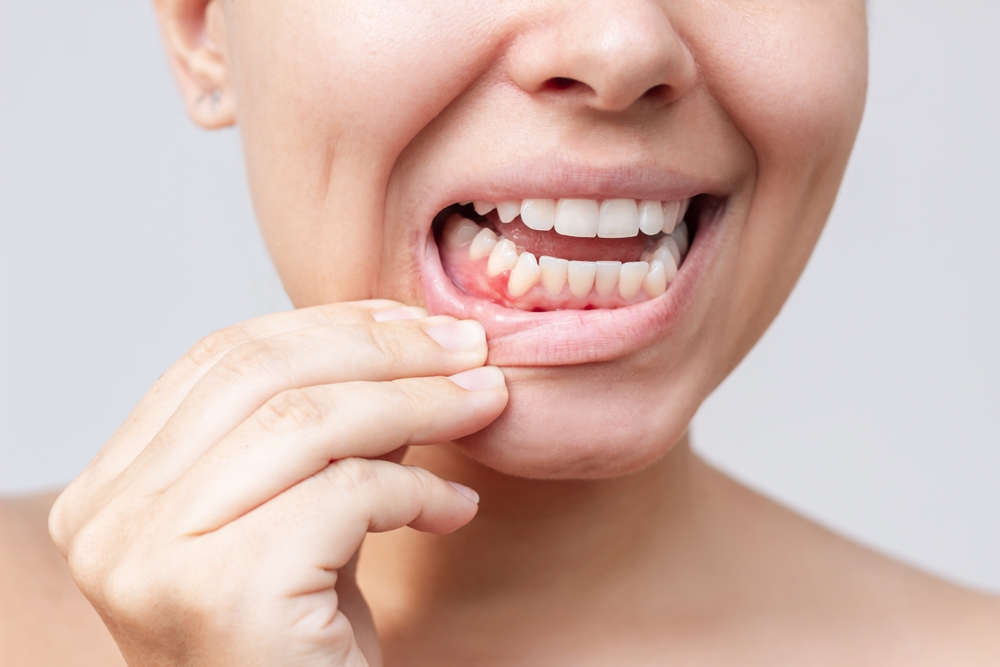
When people wonder whether they need a dentist for gum disease, they often fear they’ve waited too long. That fear is understandable, but it’s rarely accurate.
The stage of the disease at diagnosis determines how much can be reversed versus managed. Treatment at any stage usually produces better results than continued delay. Some patients have early inflammation that clears up in weeks. Others are managing more advanced bone loss that requires ongoing care.
Either way, the sooner you get your gums evaluated, the more options you have. Here’s what to expect at each stage.
Key Takeaways
- Gum disease ranges from fully reversible gingivitis to serious periodontitis, and the stage you’re in determines what treatment can accomplish.
- Dentists use periodontal probing and digital X-rays to measure damage and map the least invasive path to stabilizing gum health.
- Even advanced gum disease has treatment options, from osseous surgery to guided tissue regeneration and dental implants.
- Untreated gum disease affects more than your teeth, and the systemic health stakes make early action worth it.
- Common questions about bleeding gums, swollen gums, and what gum disease looks like, answered.
Gum Disease Isn’t One Thing, and That Changes Everything
Periodontal disease is not a single condition. It’s a spectrum, and where you fall on it shapes every treatment decision that follows. According to StatPearls, gingivitis can progress to periodontitis if it’s left untreated.
At the earliest stage, gum disease shows up as gingivitis. The tissue is inflamed and may bleed when you brush, but no structural damage has occurred yet.
Gingivitis is fully reversible with consistent oral hygiene and a professional dental cleaning. A hygienist removes plaque and tartar that brushing alone can’t reach, and the tissue heals once those irritants are gone.
Many patients are surprised this stage needs no invasive treatment at all.
Common Symptoms to Watch For
Gum disease doesn’t always announce itself with pain, which is part of why it’s easy to miss in the early stages. Knowing the warning signs helps you catch it before it progresses.
Common symptoms include:
- Gums that bleed during brushing or flossing
- Persistent bad breath that doesn’t improve with brushing
- Gums that look red, puffy, or tender to the touch
- Gums that appear to be pulling away from the teeth
- Teeth that feel loose or shift position
- A change in the way your teeth fit together when you bite
If you notice even one or two of these signs, schedule a checkup rather than waiting for symptoms to worsen. Catching gum disease early almost always means simpler, less invasive treatment.
How Gingivitis Differs from Periodontitis
Periodontitis is a different situation. Unlike gingivitis, it involves irreversible loss of the bone and soft tissue that support your teeth. Treatment can still stabilize it.
Once the disease reaches periodontitis, the goal shifts from reversal to stabilization. Bone and connective tissue lost to infection don’t grow back on their own. The approach shifts from eliminating inflammation to halting the disease and preserving what remains.
Why So Many People Wait Too Long
This problem is significant. The CDC’s Chronic Disease Indicators resource confirms that periodontal disease and tooth decay are leading causes of tooth loss among U.S. adults. Many adults delay care for reasons like anxiety, cost, or assuming their symptoms aren’t serious.
Patients often avoid dental appointments until a problem becomes obvious. Loose teeth or visible gum recession usually show up only after years of active disease. That’s why routine visits matter more than symptoms alone.
Tooth decay and gum disease share many risk factors, including poor hygiene, tobacco use, and skipped exams. Regular checkups can catch early-stage gum disease before it causes noticeable symptoms, often during a routine cleaning.
Age plays a role too. Gum disease becomes more common as people get older, partly because plaque and tartar have more time to accumulate and partly because certain medications and health conditions become more common with age. That doesn’t mean older adults are destined for periodontitis. It just means routine dental visits become even more valuable over time, since early detection remains the most reliable way to avoid advanced treatment down the road.
Wait, Can Receding Gums Actually Be Reversed? Here’s What Your Dentist Checks First
Gum recession is one of the clearest signs that periodontal disease has moved past gingivitis. When gums pull back and expose tooth roots, those roots become vulnerable to decay, and sensitivity becomes a daily problem.
What you can’t see is what’s happening below the gumline, and that’s where diagnosis begins.
How Dentists Measure Gum Pocket Depth
Periodontal probing is the standard measurement tool dentists use to find out. A periodontal probe is a thin instrument that dentists gently insert along the gumline to measure pocket depth at several points around each tooth.
Healthy tissue produces readings of 1 to 3 millimeters. Readings above 4 millimeters point to periodontal disease. Deeper pockets mean more bone loss and more bacteria hiding below the gumline.
Dental X-rays and digital imaging add a second layer of information. Probing measures soft tissue, while X-rays reveal the condition of the bone underneath, giving the dental team a fuller picture.
What to Expect During a Periodontal Exam
A periodontal exam is usually quick and straightforward, even though it sounds intimidating. Most patients are surprised by how routine the process feels once they’ve been through it once.
During the exam, your dentist or hygienist will typically:
- Review your dental and medical history for risk factors
- Measure pocket depth around each tooth with a periodontal probe
- Check for bleeding, swelling, or recession along the gumline
- Take X-rays if bone loss is suspected
- Discuss findings and recommend a treatment plan based on severity
The entire process usually adds only a few extra minutes to a standard cleaning appointment. Knowing what to expect ahead of time can visit feel far less stressful.
Non-Surgical Treatment: Scaling and Root Planing
For moderate to advanced periodontitis, scaling and root planing is the standard non-surgical treatment. It goes deeper than a routine cleaning.
A dentist or hygienist uses specialized tools, often including ultrasonic scalers, to remove deposits from below the gumline. Smoothing the root surfaces makes it harder for bacteria to reattach, which helps gum tissue heal against the tooth.
Dentists sometimes place antimicrobial medication directly into pockets after this treatment to target bacteria instruments can’t fully reach. Dentists then schedule maintenance visits to monitor pocket depths and keep the disease from returning.
Advanced Gum Disease Doesn’t Mean Game Over: Here’s Every Option Still on the Table
When non-surgical treatment can’t fully control the disease, surgical options become the next step. Advanced gum disease doesn’t eliminate choices. It changes which ones apply.
Osseous Surgery and Bone Grafting
Osseous surgery, sometimes called flap surgery, directly addresses bone loss. Dentists fold gum tissue back so the dental team can reach the roots and bone beneath. They reshape irregular areas and reduce pocket depth.
Guided Tissue Regeneration
Guided tissue regeneration takes a different approach. Dentists place a biocompatible membrane between gum tissue and bone. This blocks fast-growing soft tissue from filling the space before bone can regenerate. Dentists often use bone grafts alongside it.
Gum Grafting for Receded Tissue
For patients with significant tissue loss, gum grafting replaces what’s gone. Dentists attach tissue from another part of the mouth, or donor material, to the affected site. This protects exposed roots and reduces sensitivity.
Research has linked untreated periodontitis to cardiovascular disease. A meta-analysis published in Frontiers in Cardiovascular Medicine found that an increased risk of CVD is associated with periodontal disease, independent of sex. Treating gum disease protects more than your teeth.
Recovery After Surgical Treatment
Recovery time varies by procedure, but most patients return to normal activities within a few days to a week. Mild swelling and tenderness are common in the first 48 hours and typically respond well to over-the-counter pain relief and ice packs.
Your dentist will usually recommend a soft-food diet for the first several days, along with gentle brushing around the treated area. Avoiding smoking during recovery is especially important, since it can slow healing and increase the risk of complications.
Follow-up visits let your dentist track healing progress and confirm the tissue is responding as expected. Most patients notice steady improvement in comfort and gum appearance within two to four weeks of treatment.
Dental Implants for Missing Teeth
For patients who’ve already lost teeth, dental implants offer a long-term replacement option, including guided planning for precise placement. Even patients with significant bone loss across multiple teeth often have realistic paths forward.
Gum grafts, bone grafts, and implants aren’t last resorts. They’re part of a continuum that starts the moment someone decides to seek care.
It’s Not Too Late to Visit a Dentist for Gum Disease
Seeing a dentist for gum disease at any stage gives you more options, not fewer. With the right care, you can reverse gingivitis and stabilize periodontitis. Even advanced bone loss has surgical paths that protect both function and overall health.
The earlier you act, the simpler and less invasive treatment tends to be. If you’ve noticed bleeding, swelling, or sensitivity, a dental evaluation is the clearest way to find out what you need. Waiting rarely makes the situation simpler, and starting the conversation now keeps more options open. Schedule your dental appointment with btyDental today!
FAQs
Why are my gums bleeding?
Bleeding gums usually mean gingivitis, the earliest and most reversible stage of gum disease. Data from NIDCR shows nearly 2 in 5 adults have some form of it. Plaque buildup irritates the gumline and makes it fragile. Brushing, flossing, and a professional cleaning usually resolve it.
Why are my gums swollen?
Swollen gums usually mean bacteria have irritated or infected the tissue, often an early sign of gum disease. Dry mouth, certain medications, and tobacco use can make it worse too. A quick dental exam can tell you exactly what’s going on.
Why do my gums hurt?
Gum pain can come from infection, recession, or deepened periodontal pockets putting pressure on the tissue. Jaw pain alongside it can mean infection has spread or your bite alignment is off. A periodontal evaluation pinpoints what’s actually causing the discomfort.
What does gum disease look like?
Healthy gums are pink, firm, and sit snugly around each tooth. As gum disease progresses, tissue turns red or swollen and pulls away, making teeth look longer. Gum cancer can cause similar changes too, especially with a history of tobacco use.
Can gum disease affect your overall health?
Yes, and it’s a bigger deal than most people realize. Research has linked untreated periodontitis to cardiovascular disease, diabetes, and respiratory illness, since chronic gum inflammation can affect the rest of the body too. Treating gum disease is genuinely a whole-body health issue.
