
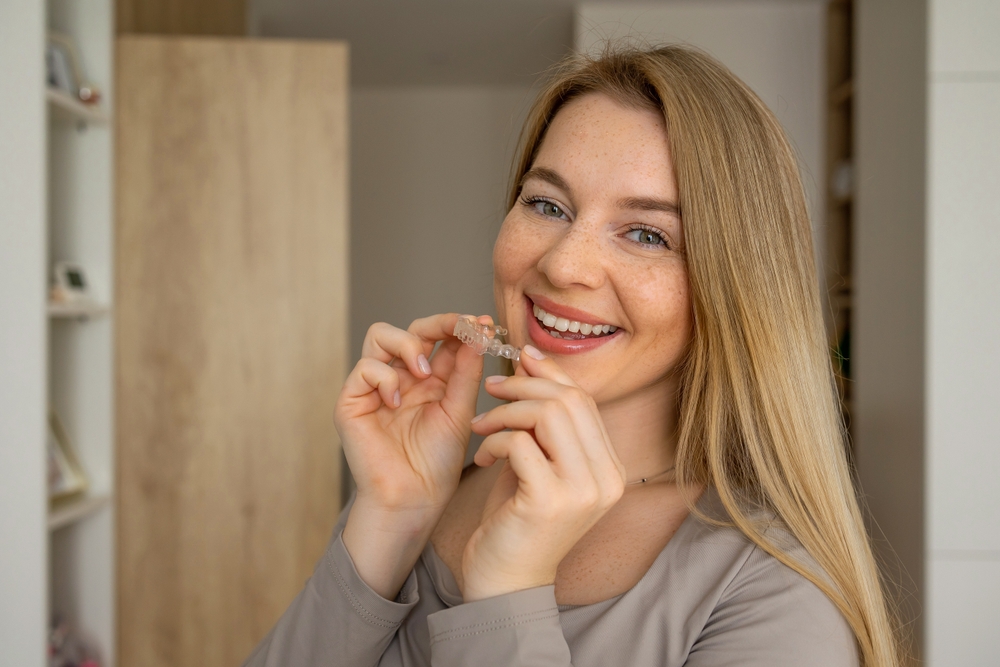
For many patients, Invisalign clear aligners offer straighter teeth without metal wires or brackets. They work best for mild to moderate alignment issues and patients who wear the trays as directed. Severe bite problems and heavy tooth rotation often call for a different approach.
Knowing the difference before you start can save time, money, and a second round of treatment. A short visit with a dental provider shows whether your case suits trays or something else. This guide explains how the trays work, where they fall short, and what to ask first.
Key Takeaways
- Custom-made trays planned from 3D scans move your teeth in small steps without metal wires or brackets.
- Aligners work well for mild to moderate cases when you wear them 20 to 22 hours a day.
- Tooth rotation and severe bite problems often respond better to metal braces than to clear trays.
- Mail-order aligners skip the in-person exam that can catch hidden problems before treatment starts.
- A dental professional can confirm whether aligners fit your case, your timeline, and your goals.
How Clear Aligner Therapy Works: Clear Plastic Trays, Digital Scans, and Custom-Made Trays
Clear aligner therapy starts with digital scans and 3D dental imaging of your mouth. From there, a series of clear trays does the work.
Three Steps From Scan to Trays
The process follows three steps:
- A scan captures your teeth and bite in detail.
- A dental provider plans each tooth movement on a 3D model.
- Custom-made trays arrive in a series, and each one shifts your teeth a little further.
Materials and Scanners Behind the Trays
Most trays use a BPA-free thermoplastic. Some systems use TruGEN, a material that aims to hold its shape and apply steady pressure longer than older options.
Many offices scan with the iTero Element scanner, which skips the putty dental impressions older methods required.
How Treatment Moves Tray by Tray
Each tray stays in for a set period before the next one takes over. That steady rhythm lets small movements add up over months.
Checkups let your provider confirm that your teeth track the plan. Treatment durations vary, so ask for an estimate at your first visit.
Digital planning shows the expected end position before you start. That preview helps you judge whether the goal matches what you want from your smile. It also helps your provider spot cases that need a different tool early.
What Research Says About Results
Research supports the clinical case for aligners. Both clear aligners and braces were effective. A systematic review in BMC Oral Health compared trays with fixed appliances across clinical studies. Patients in those studies frequently reported that aligners were more comfortable and more aesthetically acceptable than fixed appliances.
Does Clear Aligner therapy make oral hygiene easier?
Yes. Removable aligners come out for brushing and flossing. You keep your normal cleaning routine without working around metal fixtures or wires.
That convenience comes with a firm rule. Skipping wear time slows tooth movement and can let teeth shift back.
Keep these habits in mind:
- Wear the trays 20 to 22 hours per day.
- Remove them to eat, drink anything but water, brush, and floss.
- Brush before putting the trays back in.
- Follow the tray schedule your provider sets.
Your provider reviews your alignment issues and teeth correction goals at the start of treatment. The 3D scan then confirms whether this approach fits your case.
Aligners suit many cases, so the next question is where they struggle.
When Clear Orthodontic Treatments Fall Short: Metal Braces, Bite Issues, and Rotational Movement
Clear orthodontic treatments have real limits, and the mechanics of how aligners grip teeth set them. As a Cureus narrative review explains, those mechanics form the basis of their scope and limitations.
Aligners wrap around the outside surface of each tooth. That gives them good control over tipping and spacing, but less control over rotation.
Why Rotational Movement Is So Hard
Rotational movement is the clearest example. Spinning a tooth around its root axis, especially a premolar, takes sustained force from several angles. Metal wires and fixtures can deliver that force.
A plastic tray gripping the tooth’s outer surface has less leverage for the same movement.
Providers sometimes bond small tooth-colored bumps, called attachments, to the teeth to give trays more grip. Attachments help in many cases. Their benefit for rotation stays inconsistent, so providers plan carefully.
Many cases also need a set of refinement trays near the end. Those extra trays fix small gaps between the plan and the real result. They add time, so plan for that possibility.
When Bite Issues Need More Than Trays
Bite issues add another layer of complexity. Severe overbites, underbites, and crossbites often involve skeletal differences, not just tooth position. Correcting them may require forces that aligners cannot generate alone.
In some cases, palatal expanders must widen the jaw before any tooth movement begins. Expanders do not work with aligner-only dental treatment.
Cases That Often Need Braces
These situations often point toward braces or another fixed option:
- Severe tooth rotation, especially premolars.
- Skeletal overbites, underbites, and crossbites.
- Cases that need palatal expanders.
- Complex movements that need steady force around the clock.
If any of these sound like your case, ask your provider about fixed options too.
Lingual braces sit on the inside surface of the teeth, and tooth-colored brackets blend in with the enamel.
These options use metal wires and metal fixtures, which many patients find less appealing. They give providers more precise control in difficult cases.
Treatment Speed and Simpler Cases
Treatment speed is also worth considering. Fixed appliances apply force around the clock. Aligners only work during the hours you wear them, so complex cases can take longer with trays than with braces.
For patients with specific treatment goals and a firm timeline, that gap matters.
Aligners still shine in simpler cases. Mild to moderate crowding, gaps between teeth, and minor tipping respond well to trays. Patients who follow the wear schedule tend to see stronger results.
The right path depends on a full clinical evaluation, not a general preference. Case complexity, the type of movement required, and the severity of orthodontic issues all shape what a dental professional recommends.
Once you know those limits, the next choice is who guides your treatment.
Choosing Between Aligner Brands, Mail Order Aligners, and In-Office Dental Professionals
Aligner brands differ in more than materials and marketing. The real question is whether a licensed dental professional examines your teeth first.
In-office care means a dental professional checks your teeth in person and tracks your progress through regular dental check-ups. Mail order aligners skip that step.
What Goes Wrong Without an In-Person Exam
Direct-to-consumer aligner companies rely on at-home impressions and virtual check-ins instead of in-person exams. A study in the Dentistry Journal found that unsupervised use has led to oral health problems.
FDA adverse-event reports have linked unsupervised direct-to-consumer aligners to oral health problems. In one survey, 77% of responding orthodontists reported seeing retreatment cases tied to direct-to-consumer aligner use.
Retreatment means starting over, often to fix damage that was not there before.
What an In-Person Exam Catches
The in-person step is not a formality. A provider can catch conditions that make aligner treatment unsafe or ineffective.
Patients with gum disease or bone loss may not be good candidates at all. At-home impressions and photos do not reveal those conditions.
Patient compliance is another variable that in-office care handles better. If your teeth stop tracking with the trays, a provider who sees you in person can adjust the plan early. Virtual check-ins may miss the same issue until it is harder to correct.
Brand names matter less than the supervision behind them. A well-known tray from an unsupervised program still skips the exam. Many in-office systems include scans, planning, and regular checks.
Ask any provider which system they use and why it fits your case.
What to Review Before You Start
Before starting any treatment, review these factors with a dental professional:
- Treatment goals
- Case complexity
- Patient compliance history
- Treatment durations
- Treatment costs
- Dental insurance coverage
What works for one patient may not work for another, even when alignment issues look similar on the surface.
Costs vary by case and by provider, and your dental insurance plan may or may not cover aligner treatment. Ask for a written estimate and a clear timeline before you commit. A good office walks you through both without pressure.
Bring these questions to your first visit:
- Is my case mild, moderate, or complex?
- Will I need attachments, expanders, or extra trays?
- How long will treatment take?
- What will it cost, and what does insurance cover?
- Who monitors my progress, and how often?
A dental clinic consultation with digital scans and a clinical exam shows whether aligners fit your oral health goals. Researchers writing in Life call clinical examination and case selection a key step before aligner therapy starts. Professional 3D scanning answers these questions before treatment begins, not after problems appear.
Ask to see your scan and treatment plan during that visit.
Ready to find out if Invisalign clear aligners fit your smile?
Invisalign clear aligners suit mild to moderate cases, and many patients prefer them for comfort and looks. Results tend to improve when a case avoids complex rotation or skeletal correction and the wearer follows the schedule.
Rotation and severe bite problems often point toward braces instead. Mail-order aligners skip the in-person exam that can catch hidden problems.
Case complexity and patient compliance are hard to judge on your own. A short visit turns guesswork into a plan you can follow. Bring your questions, and leave with a clear next step. To see if aligners fit your goals, talk with btyDental and we can review your imaging in person!
FAQs
How long does Invisalign treatment typically take?
Treatment length depends on case complexity. Mild cases may take six to twelve months, while more involved alignment issues can require eighteen months or longer. A dental provider gives you a more accurate timeline after reviewing your 3D scan results at the initial consultation.
How many hours a day do you have to wear Invisalign aligners?
Most aligner systems require 20 to 22 hours of wear per day. The trays come out only for eating, drinking anything other than water, brushing, and flossing. Wearing them less than the recommended amount slows tooth movement and can extend overall treatment time.
Can Invisalign fix an overbite or underbite?
Aligners can address mild to moderate overbites and underbites in some patients. Severe bite issues involving skeletal differences often require metal braces, additional orthodontic appliances, or other interventions. A clinical evaluation with diagnostic imaging is the only reliable way to determine what your case requires.
What happens if I stop wearing my aligners early?
Stopping early allows teeth to shift back toward their original positions. Without completing the full treatment plan, the movements achieved may not hold. Your provider may recommend retainers or revised trays, but incomplete treatment often means the results won’t last without further intervention.
Is Invisalign suitable for teenagers as well as adults?
Yes. Aligner systems for teenagers include features that account for teeth still coming in and habits that affect compliance. A dental professional judges whether a teen is a good candidate. They weigh dental development, case complexity, and the ability to follow the wear schedule.
