
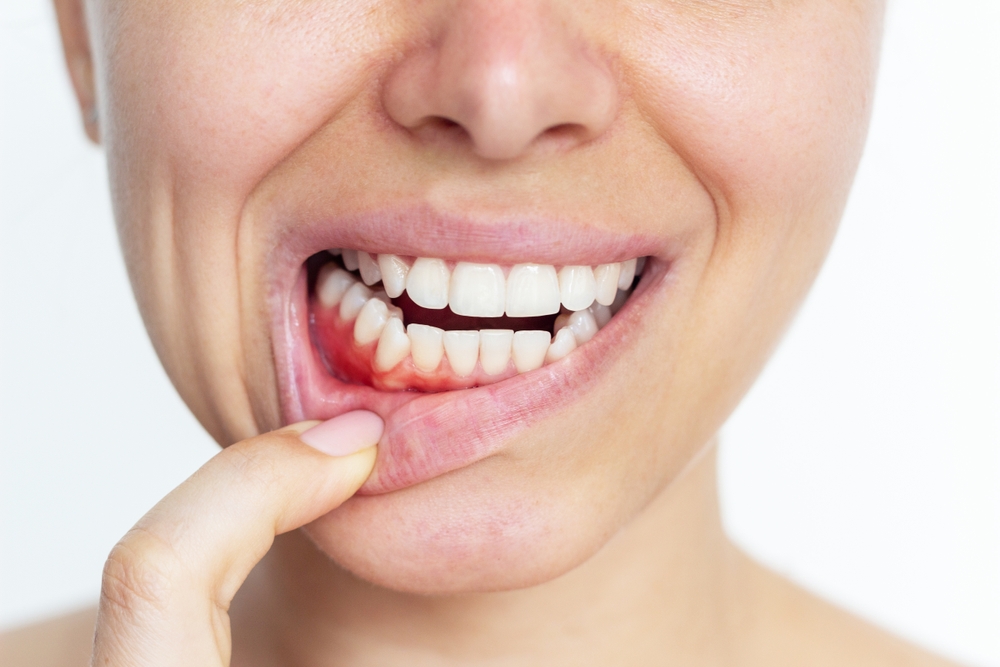
Gingivitis symptoms and full-blown periodontitis look related on the surface. But they sit on opposite sides of one line: one stage heals, the other doesn’t. Both start the same way: bacteria collect along the gum line. What happens next depends almost entirely on how quickly you catch the problem.
This guide breaks down what each stage looks like and how common periodontitis actually is. It also covers what treatment involves once gingivitis has progressed.
Key Takeaways
- Gingivitis causes red, swollen, bleeding gums through plaque buildup along the gum line, and it’s fully reversible with brushing, flossing, and a professional cleaning.
- Untreated gingivitis becomes periodontitis, which destroys the bone and tissue holding your teeth in place, and that structural damage cannot be reversed.
- Periodontitis treatment ranges from scaling and root planing to surgical options like guided tissue regeneration and bone grafting, depending on how far the disease has progressed.
- Catching gum disease at the gingivitis stage, before it reaches the bone, is the most reliable way to avoid permanent damage.
- Get straight answers to the questions patients most commonly ask about gingivitis, periodontitis, and what to do about each.
What Gum Disease Really Looks Like: Recognizing Gingivitis Symptoms Early
Gum disease rarely starts with pain, which is exactly why it’s easy to miss.
Recognizing the Early Signs
Early signs include gums that look redder than normal and mild swelling along the gum line. Bleeding when you brush or floss is common too. Many people assume they brushed too hard.
The real cause is usually plaque, a sticky film of bacteria. It builds up along and beneath the gum line whenever food debris isn’t cleared away. Plaque releases toxins that irritate gum tissue, and that irritation triggers inflammation.
Gingivitis is a broad category that describes infection and inflammation of the tissues around the teeth, according to the Centers for Disease Control and Prevention. It hasn’t reached the bone underneath yet. That distinction matters.
Why Gingivitis Is Reversible
Because the damage hasn’t reached the bone, gingivitis is fully reversible. Consistent brushing, daily flossing, and a professional cleaning can return the gum tissue to a healthy state. There are no lasting structural changes.
What makes some people more susceptible to gum inflammation?
Not everyone develops gingivitis at the same speed. Several factors make gum tissue more reactive to plaque and slow the body’s ability to fight it off.
- Tobacco use reduces blood flow to the gums, which slows healing and can hide early bleeding.
- A weakened immune system, from illness or medication, limits the body’s ability to control bacteria.
- Autoimmune conditions raise risk for the same reason.
- Certain medications, including calcium channel blockers and anti-seizure drugs, can cause gum tissue to grow abnormally and trap bacteria.
- Tooth decay and poorly fitting dental work also give bacteria more places to collect.
Age and genetics also play a role. Hormonal changes during pregnancy, puberty, or menopause can make gum tissue more sensitive to plaque, and some people simply inherit a stronger inflammatory response to the same amount of bacteria. That’s why two people with similar habits can end up with very different gum health.
Building Better Home Care Habits
Good home care makes a real difference. Fluoridated toothpaste used twice daily breaks down plaque before it hardens. An electric toothbrush often cleans more consistently along the gum line than manual brushing. Antibacterial rinses lower bacterial counts between brushings, though they work best alongside brushing, not instead of it.
Diet matters as well. Sugary and starchy foods feed the bacteria that form plaque, so cutting back on frequent snacking gives your saliva more time to neutralize acids and rebalance your mouth between meals.
When Gingivitis Becomes Periodontitis: Bone Loss, Gum Recession, and Loose Teeth
How the Infection Spreads Below the Gum Line
Once gingivitis goes untreated, the infection moves below the gum line and becomes periodontal disease. That shift changes everything about recovery. Bacteria no longer affect only the soft tissue. They start breaking down the bone and connective tissue anchoring your teeth in place.
As the infection spreads, gum tissue pulls away from the teeth and forms periodontal pockets. These pockets trap more bacteria and food debris, which accelerates the damage. Gum recession follows, exposing tooth roots and making teeth look longer.
Bone loss continues from there. Teeth loosen, and in advanced cases, tooth loss follows.
Diagnosing Periodontitis
The National Institute of Dental and Craniofacial Research reports that 2 in 5 adults have periodontitis, with roughly 42% of U.S. adults over 30 showing some form of the disease. Severe cases affect about 7.8% of adults in that group.
A periodontal evaluation measures how far the disease has progressed. During the exam, a dental professional uses a small probe to check pocket depth around each tooth. Dental X-rays reveal bone levels a visual exam can’t catch. In some cases, testing identifies the specific bacteria present to guide treatment.
Because early periodontitis can feel painless, many patients don’t realize how far it has progressed until an evaluation shows measurable pocket depth or bone loss on an X-ray. This is one reason routine exams matter even when nothing feels wrong.
How Periodontitis Affects More Than Your Mouth
Periodontitis doesn’t stay contained to the mouth. Research hosted by the National Institutes of Health links periodontitis to a higher risk of cardiovascular disease, finding a significant association between periodontal disease and CVD. Inflamed gum tissue creates an opening for bacteria to enter the bloodstream through open sores.
From there, those bacteria can trigger inflammation that reaches the heart and other organs.
This is why patients managing diabetes, cardiovascular conditions, or other systemic concerns need extra attention. Dental professionals often encourage treating gum checkups as part of overall health, not just dental care.
Scaling and Root Planing, Deep Cleaning, and Surgical Interventions: How Gum Disease Is Treated
Scaling and Root Planing: The First Line of Treatment
Once a dentist confirms periodontitis, scaling and root planing is typically the first-line treatment. The American Dental Association identifies this deep cleaning as beneficial to patients with chronic periodontitis. A dental hygienist removes plaque and hardened deposits from below the gum line. Then the hygienist smooths the root surfaces so gum tissue can reattach.
This procedure differs from a standard cleaning, which works above the gum line and suits patients without deep pockets. Scaling and root planing targets the pockets directly, and patients typically receive local anesthesia for comfort.
Ongoing Periodontal Maintenance
After treatment, periodontal maintenance becomes part of ongoing care. Patients with a history of periodontitis usually return every three to four months instead of the standard six-month interval. These visits let the dental professional track pocket depth and catch recurrence early.
Surgical and Advanced Treatment Options
For advanced cases, patients may need deeper intervention. Treatment often follows a general sequence:
- Pocket reduction surgery reshapes gum tissue to close off areas where bacteria collect.
- Guided tissue regeneration uses a barrier membrane to help rebuild lost bone and tissue.
- Bone grafting replaces destroyed bone with graft material to restore support.
- Gum grafting covers exposed roots when recession is significant.
The right option depends on how much bone and tissue have already been lost, so a dentist typically maps out a plan after a full evaluation rather than jumping straight to surgery.
Less Invasive Alternatives
Some practices also offer less invasive options, including:
- Laser therapy to remove diseased tissue while preserving healthy tissue
- Antibiotic therapy, applied locally or taken systemically, to reduce bacterial load
- Regenerative procedures using platelet-rich plasma or platelet-rich fibrin to support healing
These approaches are often paired with scaling and root planing rather than used on their own, giving the gum tissue extra support while it heals.
Why Early Detection Still Matters
Routine checkups remain the most reliable way to catch gum disease before it reaches the bone. That holds whether you have natural teeth or a dental implant. The CDC notes that a yearly dental visit allows early detection and treatment of gum disease.
Don’t Wait Until Gingivitis Symptoms Turn Into Tooth Loss
Recognizing gingivitis symptoms early is what makes the biggest difference in whether gum damage can be reversed. Gingivitis responds to consistent brushing, flossing, and professional cleaning. Periodontitis causes structural damage that treatment can only manage, not undo.
The line between the two stages isn’t always obvious from the mirror. If your gums bleed, feel swollen, or it’s been over a year since your last exam, it’s worth getting checked. A professional evaluation is the clearest way to know where you stand. Schedule your cleaning and exam with btyDental today!
FAQs
How to treat gingivitis?
Treating gingivitis starts with removing the plaque that causes it. Brush twice daily, floss once a day, and schedule a professional cleaning to clear buildup you can’t reach at home. Most cases resolve fully with consistent habits. Your dental team may also suggest an antibacterial rinse to help between visits.
Is gingivitis contagious?
Gingivitis itself isn’t contagious, but the bacteria behind it can pass between people through saliva. Sharing utensils, a toothbrush, or kissing can transfer these bacteria to someone else’s mouth. Whether that leads to gingivitis depends on that person’s oral hygiene and individual susceptibility to inflammation.
What does gingivitis look like?
Gingivitis shows up as gums that look red or puffy instead of their usual pink. Bleeding during brushing or flossing is common, and some people notice mild tenderness. Many cases involve no pain at all, which is exactly why the condition often goes unnoticed until a checkup.
Can gingivitis be reversed?
Yes. Gingivitis hasn’t damaged the bone or supporting structures yet, so the problem stays limited to soft tissue. Brushing, flossing, and a professional cleaning are usually enough to restore healthy gums. Once the disease progresses to periodontitis, you can no longer reverse the damage.
What is the difference between gingivitis and periodontitis?
Gingivitis is the earlier, milder stage. It stays limited to the soft tissue along the gum line and is fully reversible with good care. Periodontitis develops when gingivitis goes untreated, and the infection spreads beneath the gum line, damaging bone and supporting tissue. That structural loss is permanent.
Sources
- https://www.cdc.gov/oral-health/data-research/facts-stats/fast-facts-gum-disease.html
- https://www.ada.org/sitecore/content/ADA-Organization/ADA/MouthHealthy/home/all-topics-a-z/scaling-and-root-planing
- https://pmc.ncbi.nlm.nih.gov/articles/PMC10010192/
- https://www.nidcr.nih.gov/research/data-statistics/periodontal-disease/adults
- https://www.cdc.gov/oral-health/data-research/facts-stats/fast-facts-gum-disease.html
